You have a microphone, headphones, and a bedroom lined with shelves full of books to "absorb" the sound. You think that's enough to launch your podcast. That's what most of our clients thought before coming to VoxSpace — and almost all of them told us the same thing: they should have started in a studio from the very first episode.
Sound is 50% of how professional you're perceived to be
Your listeners forgive a lot. They forgive imperfect editing. They forgive hesitation. They don't forgive poor audio quality. A study conducted by the University of Southern California showed that podcasts with poor sound quality are perceived as less credible, even when the content is excellent. Your voice carries your message — if it sounds bad, the message suffers.
At home, even with good equipment, you have to deal with street noise, the neighbors, the air conditioning, room resonance, and temperature swings that affect the mic. In a studio, all of that is already handled before you arrive.
The equipment makes a real difference
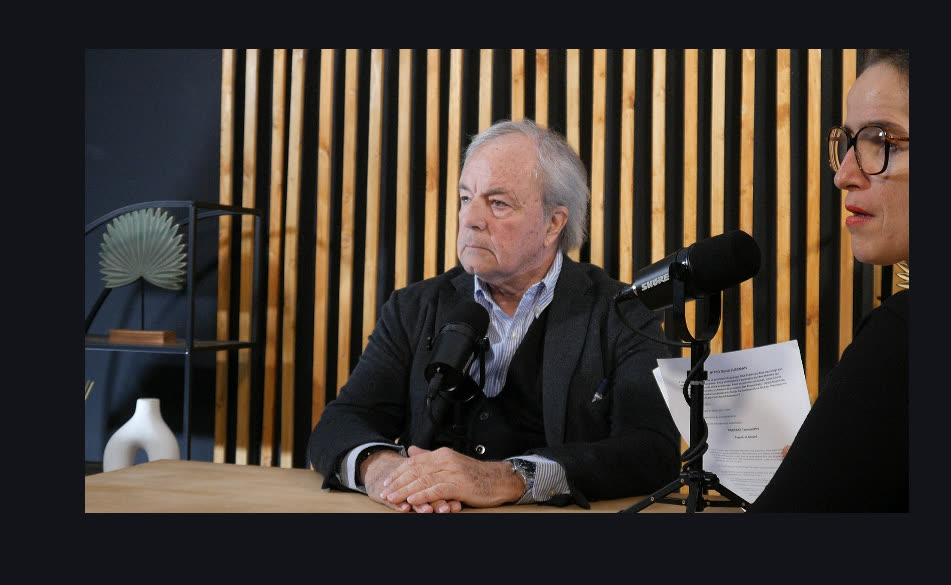
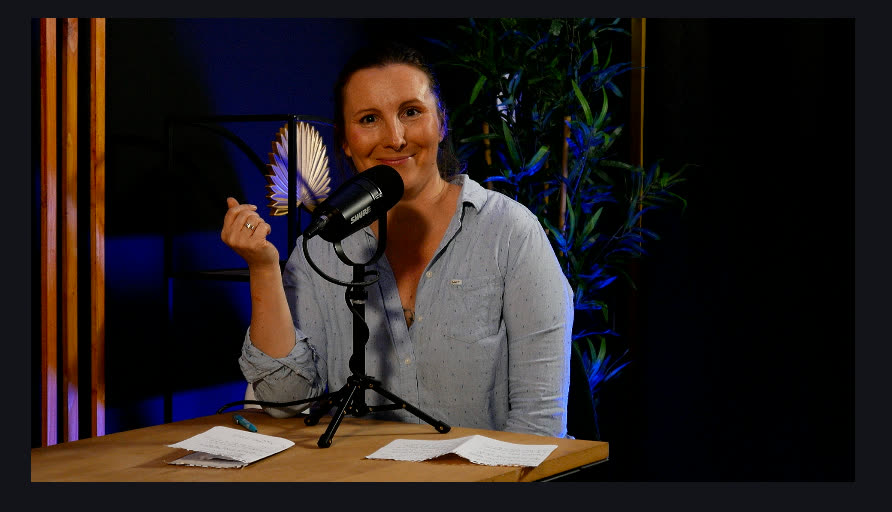
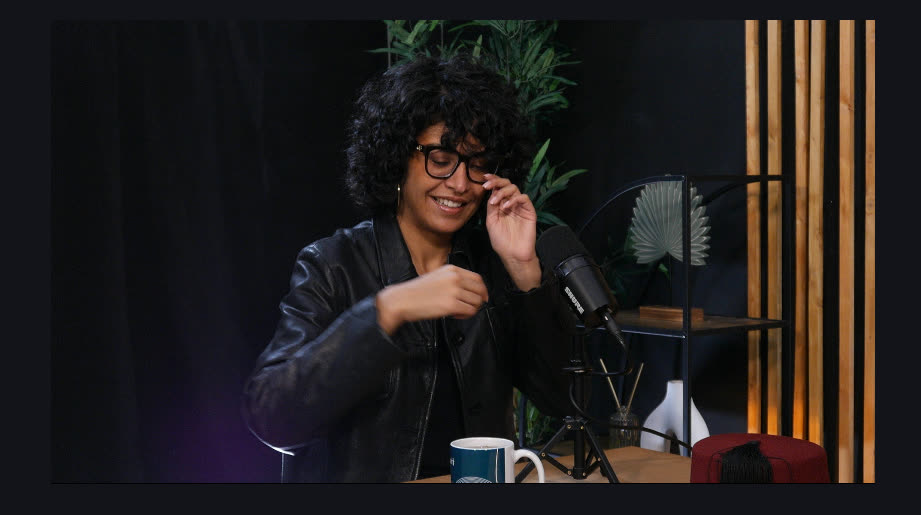
Our Shure MV7X microphones in XLR configuration, connected to the Rodecaster Pro II, capture a vocal dynamic that no €80 USB microphone can reproduce. This isn't snobbery — it's physics. The professional audio chain (microphone → preamp → converter → recorder) eliminates hiss, intelligently compresses peaks, and preserves the frequencies that make your voice present and warm.
Our LUMIX G7 cameras in 4K with three simultaneous angles give you a look instinctively associated with the big shows — Joe Rogan, Lex Fridman, Thinkerview. That visual quality puts your podcast in a premium category from the very first episode.
Focus: an underrated advantage
Recording at home also means dealing with domestic life. A kid coming home, a package delivery, a cat on your lap. In a studio, you're in a dedicated space. Your guests are in an environment that tells them "we're doing something serious here." The level of focus — yours and your guests' — naturally rises.
Several of our clients have told us that their best interviews, their most in-depth conversations, happened in the studio. The environment shapes the quality of the exchange.
The real cost of home studio gear
If you want to get close to professional studio quality at home, budget for: a quality XLR microphone (€200-400), an audio interface (€150-300), room acoustic treatment (€500-1,500), video lighting (€200-500), a 4K camera (€600-1,200), editing software (monthly subscription). Total: €1,650 to €3,900 minimum, not counting the hours spent learning to master it all.
A session at VoxSpace starting at €69 gives you access to all of that, turnkey, with an on-site operator. For most creators publishing two episodes a month, the studio is financially more rational than a home studio for the first 18 months.
Video changes everything in 2026
YouTube Podcasts has overtaken Apple Podcasts in audience since mid-2025. TikTok and Instagram Reels distribute podcast clips to audiences who would never have subscribed through a listening app. If you're not filming your episodes, you're missing out on 60 to 70% of your growth potential.
Filming a podcast professionally at home is a significant logistical challenge. In a studio, the three cameras are already positioned, the lighting is set, and you leave with footage ready to edit.
What our clients tell us
Benjamin, who runs VoxSpace day to day, has guided dozens of creators since opening. The most common feedback: "I thought it was for professionals, and it turns out it's what let me become one." The studio isn't an expense — it's an investment in how your audience perceives you.
If you're still on the fence, start with a Video session at €119: a full session with an operator, and files delivered within 48h. Want to plan your project first? Our 30-minute consulting session at €19.99 is deducted from your next session. You'll see the difference.
You might also like
Ready to record at VoxSpace?
Podcast & video studio in Marseille · From €69 · On-site operator · 48h delivery